Updated: May 2026
Lonely Planet TripAdvisor airport rail linkA practical Berlin where-to-stay guide for first-timers, nightlife trips, museum-heavy visits, BER arrivals, Berlin Hbf arrivals, families, budget stays, late check-in, transport zones, and final-walk comfort.
The best area to stay in Berlin is not simply the one closest to the Brandenburg Gate. Berlin is wide, layered, and very good at making a hotel look central on a map while the daily routine still feels awkward. The right base depends on what you want the destination to do for you: easy first-time sightseeing, quiet mornings, late bars, museum access, a smooth BER arrival, a quick Berlin Hbf handoff, a family pace, or a cheaper room that does not punish you every evening.
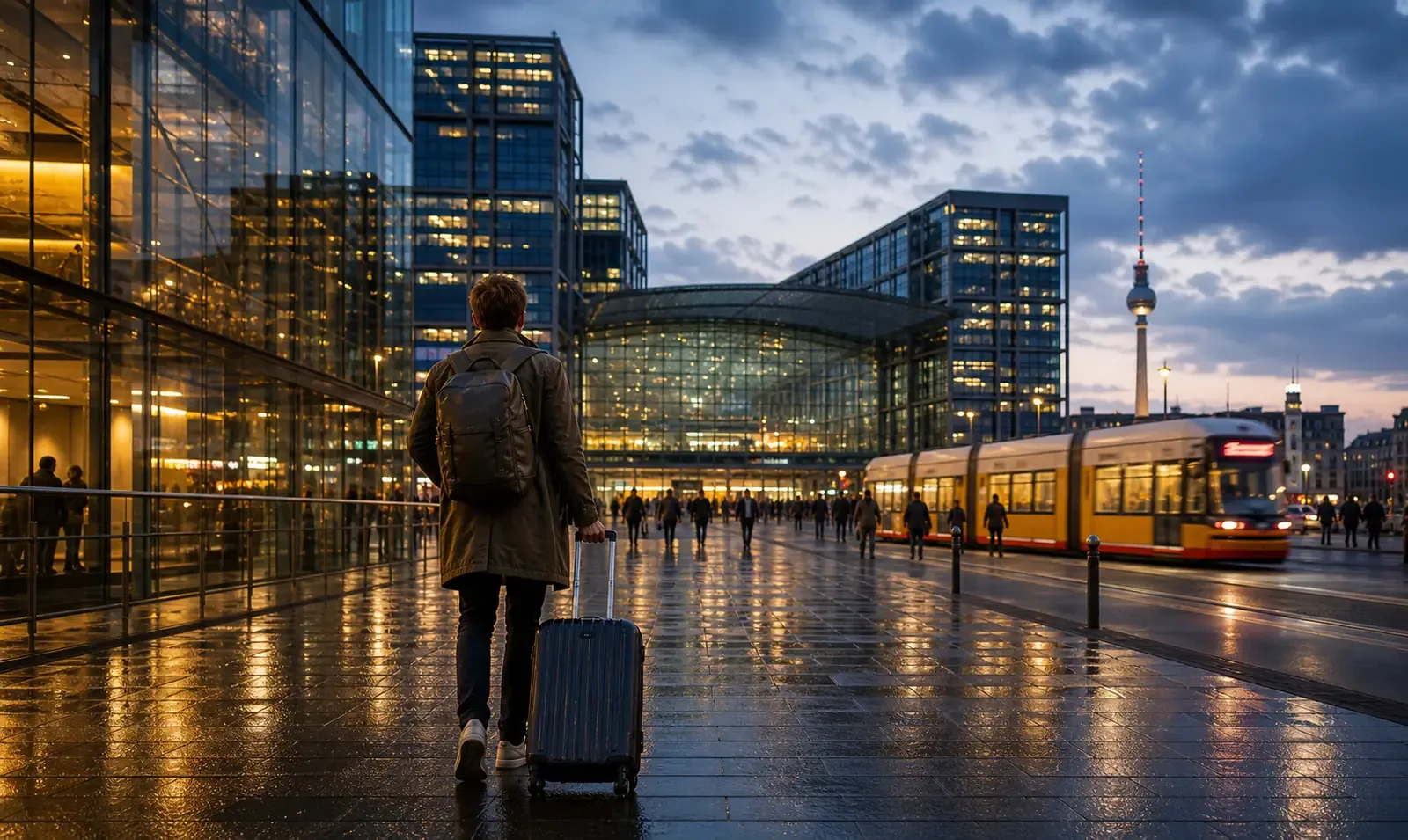
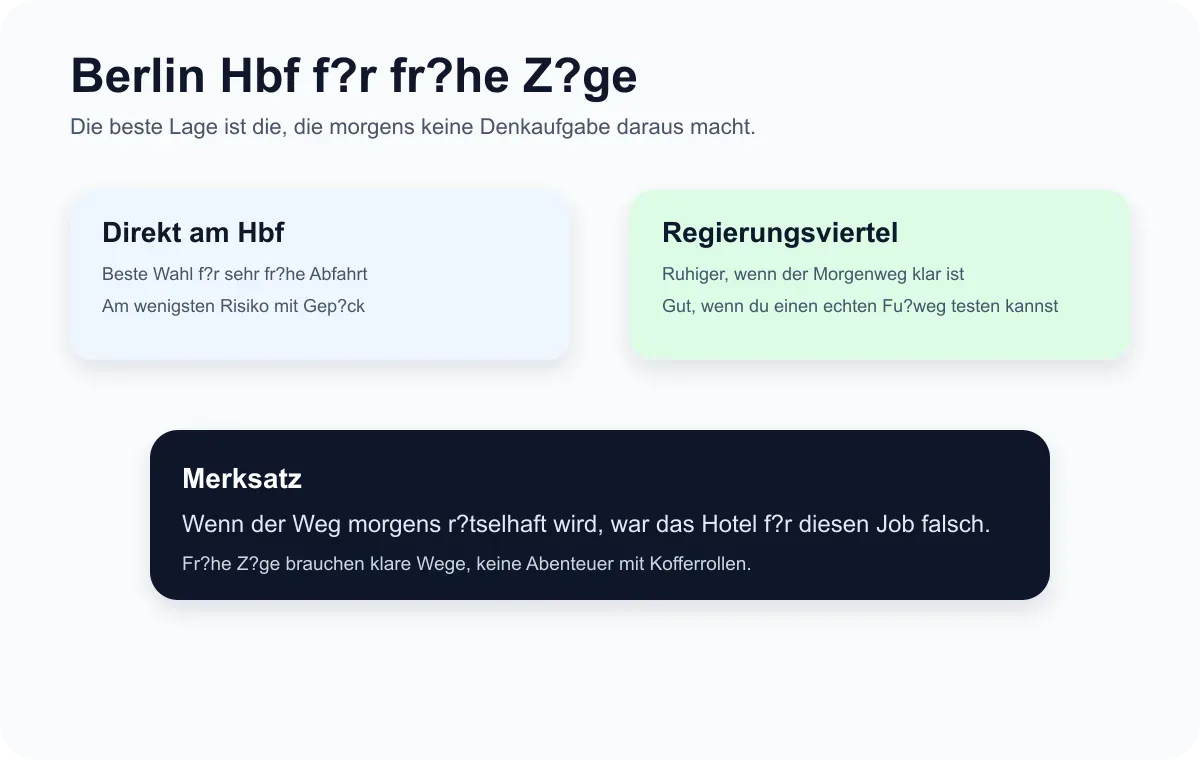
For most first-timers, Mitte is still the easiest default because it keeps the classic sights and museum days compact. Prenzlauer Berg is the better answer when you want cafes, parks, and a calmer morning rhythm. Friedrichshain and Kreuzberg are stronger when food, bars, and nightlife matter more than polished convenience. Charlottenburg is underrated for comfort, family pacing, shopping, and travelers who prefer calmer evenings in City West. If the trip is built around an early train, a late train, or a one-night rail stop, the Berlin Hbf area can be smart, but it should not be chosen automatically for a normal city stay.
Quick answer
Stay in Mitte for the easiest first trip, Prenzlauer Berg for calmer mornings, Friedrichshain or Kreuzberg for nightlife and food, Charlottenburg for comfort and family pace, and Berlin Hbf only when station logistics are central to the trip. If you want one classic premium Mitte example, Hotel Adlon Kempinski Berlin fits that first-trip logic.
Table of contents
- Berlin area decision table
- Best area for first-timers
- Best base for museums and classic sights
- Best areas for nightlife and late food
- Best areas for families and calmer stays
- Best areas for BER and Berlin Hbf arrivals
- Budget strategy without daily friction
- Transport zones and daily movement
- Safety, sleep, and the final walk
- Late check-in and first-night logic
- Neighborhood notes
- Trip scenarios that change the answer
- Hotel-location mistakes to avoid
- Booking checks before you reserve
- FAQ
- Source grounding
These practical details help you make a better decision before you travel.
>Berlin area decision table
Use the table as a first cut, then check the exact hotel address. Berlin neighborhoods are large enough that two hotels with the same district label can feel like completely different trips. A room near a strong U-Bahn, S-Bahn, tram, or regional station can be easier than a prettier address that leaves you walking fifteen minutes with bags. The goal is to remove the most common travel drag before it appears.
| Trip priority | Best starting area | Why it works | Booking warning |
|---|---|---|---|
| First-time sightseeing | Mitte | Shorter days around Museum Island, Brandenburg Gate, Unter den Linden, Reichstag, and central transport. | Some blocks feel businesslike or tourist-heavy; choose near food and a useful station. |
| Museums and history | Mitte, Friedrichstrasse edge, Potsdamer Platz edge | Museum Island, government quarter, memorials, and river walks stay easy. | Do not assume every Mitte hotel is close to every museum; check walking distances. |
| Nightlife and late food | Friedrichshain or Kreuzberg | The evening happens near the hotel instead of becoming a late cross-city ride. | Read noise reviews and avoid booking directly above the street you want to visit. |
| Families and calmer mornings | Prenzlauer Berg or Charlottenburg | Cafes, wider daily rhythm, parks, restaurants, and less pressure to stay out late. | Check stroller-friendly station access and the route home after dinner. |
| BER arrival simplicity | Hbf, Potsdamer Platz, Suedkreuz, Mitte, or a direct eastern rail anchor | Airport rail works best when the final station and last walk also work. | BER trips need ABC fare coverage; check current airport service close to travel. |
| Budget with fewer compromises | Schoeneberg, Moabit, selected Charlottenburg or Friedrichshain blocks | Prices can soften without losing the destination if the station connection is strong. | A cheap room with two transfers and a poor final walk is rarely good value. |
Safety, sleep, and the final walk
Berlin is generally manageable for visitors who use normal city awareness, but comfort changes block by block. The issue for most hotel choices is less dramatic than "safe or unsafe." It is about whether the final walk feels easy when you are tired, carrying luggage, returning after dinner, or managing children. A hotel can be in a good area and still have a last approach that feels irritating at night.
Backup Options
Always have a Plan B. If your first choice falls through, knowing alternatives saves the day.
Late check-in and first-night logic
Late check-in changes what "best area" means. At 14:00, a slightly complicated route can be fine. At 23:30 after baggage delay, the same route can feel like the wrong hotel. If your first night begins after 22:00, choose a base that reduces decisions: clear reception, easy door access, a simple route from BER or Hbf, and food or essentials nearby if you arrive hungry.
Neighborhood notes
Mitte
Mitte is the forgiving base. Choose it for a first trip, a short stay, a museum-heavy itinerary, or a traveler who wants the destination to be easy before it is atmospheric. The best pockets have useful stations and food nearby, not just a famous address. Avoid assuming every Mitte hotel is equally convenient; a block near the wrong station or an empty business street can feel less helpful than expected.
Prenzlauer Berg
Trip scenarios that change the answer
Two nights with one full sightseeing day
For a very short Berlin stay, choose convenience over neighborhood romance. Mitte is usually the best answer because it protects the only full day. You can start with Museum Island or the Brandenburg Gate, return to the hotel if the weather turns, and still reach dinner without turning the evening into a transit exercise. A first-time visitor on a two-night trip rarely benefits from saving a little money in a distant area unless the hotel sits on an unusually strong direct line.
Hotel-location mistakes to avoid
Booking by district name alone
The district name is only the beginning. Mitte can mean a museum-friendly base, a sterile office block, a loud tourist corridor, or a quiet street that feels farther from food than expected. Kreuzberg can mean canal-side restaurants, nightlife, residential calm, or a station area that some travelers find intense. Charlottenburg can mean polished Ku-damm convenience or a west-side address that adds time to every east-side plan. Always zoom in to the hotel block.
Booking checks before you reserve
Before paying, test the hotel against the real trip. Search the route from BER or Berlin Hbf at the expected arrival hour. Check the walk from the nearest useful station to the hotel entrance. Look at the route back from the district where you expect to eat dinner. Read recent reviews for noise, construction, reception hours, elevators, luggage storage, and confusing entrances.
If you are choosing between two hotels, do not ask only which one is in the better neighborhood. Ask which one creates the easier first night, the easier first morning, and the safer-feeling return after dinner. A slightly less exciting hotel with a better station and quieter street often beats a more fashionable room that makes every movement harder.
Internal next steps should match the real problem. For a deeper district comparison, use Berlin Neighborhoods by Vibe. For airport arrivals, use BER to Berlin City Center. For ticket zones, use Berlin Public Transport Tickets. For early trains, use Where to Stay in Berlin for Early Trains.
The final booking rule is blunt: choose the hotel that still works when the traveler is tired. If the plan depends on perfect weather, perfect timing, a fully charged phone, and everyone being cheerful with luggage, it is too fragile for arrival day. Berlin rewards a strong base, but it punishes vague location choices.
FAQ
What is the best area to stay in Berlin for first-timers?
Mitte is usually the best first-timer base because it keeps major sights, museums, river walks, and central transport close. It is not always the most atmospheric choice, but it is the most forgiving when time is short. Choose Prenzlauer Berg instead if you want calmer mornings and are comfortable taking short rides to the main sights.
Is it better to stay in Kreuzberg or Friedrichshain?
Choose Friedrichshain when nightlife and late food are central to the trip. Choose Kreuzberg when you want food, bars, markets, and street texture with more variation by block. In both areas, the exact street matters more than the district name because noise and late-night feel can change quickly.
Where should families stay in Berlin?
Prenzlauer Berg and Charlottenburg are the safest family defaults. Prenzlauer Berg is strong for cafes, parks, and softer neighborhood rhythm. Charlottenburg is strong for comfort hotels, shopping, reception services, and calmer evenings. Families should check station access, stroller routes, and the return from dinner before booking.
Should I stay near Berlin Hbf?
Stay near Berlin Hbf if the station controls the trip: an early train, late arrival, one-night stopover, or rail-heavy itinerary. For a normal city break, Hbf is useful but not necessarily the best neighborhood experience. A city-area hotel in Mitte, Prenzlauer Berg, Charlottenburg, Friedrichshain, or Kreuzberg may fit the actual trip better.
Which area is best for a late arrival at BER?
Choose a hotel with a simple airport route and an easy final walk. Hbf, Potsdamer Platz, Suedkreuz, Mitte, or a direct eastern rail anchor can work well if the exact hotel is close to the station. If the final route needs multiple changes or a long walk after midnight, taxi or a simpler first-night hotel may be smarter.
Source grounding
This guide is grounded in official Berlin visitor, transit, and airport information from visitBerlin, BVG, VBB, and BER Airport, then translated into hotel-area decisions for real travelers. Neighborhood character can shift by block, event calendar, construction, and hotel management, so treat the area advice as a booking filter rather than a substitute for checking the exact hotel door.
Transport details can change with works, timetable adjustments, and fare updates. For BER Airport transfers, Berlin ABC ticket coverage, late arrivals, or station-dependent stays, check current BVG, VBB, BER Airport, and hotel information close to travel.
Traveler Tips
Keep these practical details in mind when making your decision.
Key Considerations
Keep these practical details in mind when making your decision.
Related guides
Sam's practical verdict
Sam's practical verdict: The best transfer choice depends on your bags, your arrival time, and your hotel location. Do not choose based on price alone. Choose based on the moment that is most fragile: heavy bags, late arrival, tired children, or a hotel that is far from public transport.