Updated: May 2026
Munich is easy to plan badly because it looks more compact than it feels on a tired arrival day. A first-timer can book near the station, imagine Marienplatz will solve everything, add museums, beer halls, English Garden, Nymphenburg, and a day trip, then wonder why the weekend feels like errands. Munich works better when you separate arrival logistics from city atmosphere.
This guide is the first decision page: where to stay, how to arrive from MUC, how to use MVV without overthinking, what to do by area, and how to pace 2 to 4 days. If your exact problem is narrower, use , MUC to Munich city center, Munich public transport tickets, or the Munich itinerary guide.
Quick answer
For most first-time visitors, Munich works best as a 3-day trip based in Altstadt, near Munich Hbf, Maxvorstadt, Schwabing, or a clean U-Bahn/S-Bahn edge. Use S-Bahn from MUC for most arrivals, taxi for late or heavy-luggage arrivals, and build the trip around one city chapter per half day.
Key details
Check the specific details for your trip timing and booking method. Prices, schedules, and availability change seasonally, so verify before you go.
Practical tips
Check the specific details for your trip timing and booking method. Prices, schedules, and availability change seasonally, so verify before you go.
Munich in plain language
Munich has a strong center, but the best trip is not just Marienplatz plus random extras. Altstadt is the classic core. Munich Hbf is practical for arrivals, early trains, and one-night stops. Maxvorstadt is the museum and cafe layer. Schwabing and English Garden shape a more relaxed north-side day. Nymphenburg and day trips need deliberate time because they pull you away from the compact center.
Where to stay in Munich
Altstadt is the safest answer for a classic first visit if budget allows. Munich Hbf is practical when trains, late arrival, or early departure matter. Maxvorstadt is a smart compromise for museums and cafes. Schwabing is better for a softer neighborhood rhythm. Do not choose a pretty hotel if the final arrival walk makes the first night harder than it needs to be.
| Area | Best for | Watch out for |
|---|---|---|
| Altstadt | Classic sights, first-timer ease, short walks | Higher prices and tourist density |
| Munich Hbf edge | Rail arrivals, early departures, one-night stops | Street choice matters a lot |
| Maxvorstadt | Museums, cafes, calmer central base | Less obvious for a pure old-town weekend |
| Schwabing | English Garden, local feel, relaxed evenings | Needs a clean transit link for first-timer sightseeing |
MUC airport arrival: S1 and S8 are the default
Munich Airport official information lists S1 and S8 S-Bahn lines connecting the airport with the city center, with S1 running via the west and S8 via the east. MVV guidance also points air travelers toward airport ticket products and city-center connections. For most visitors, S-Bahn is the default first test.
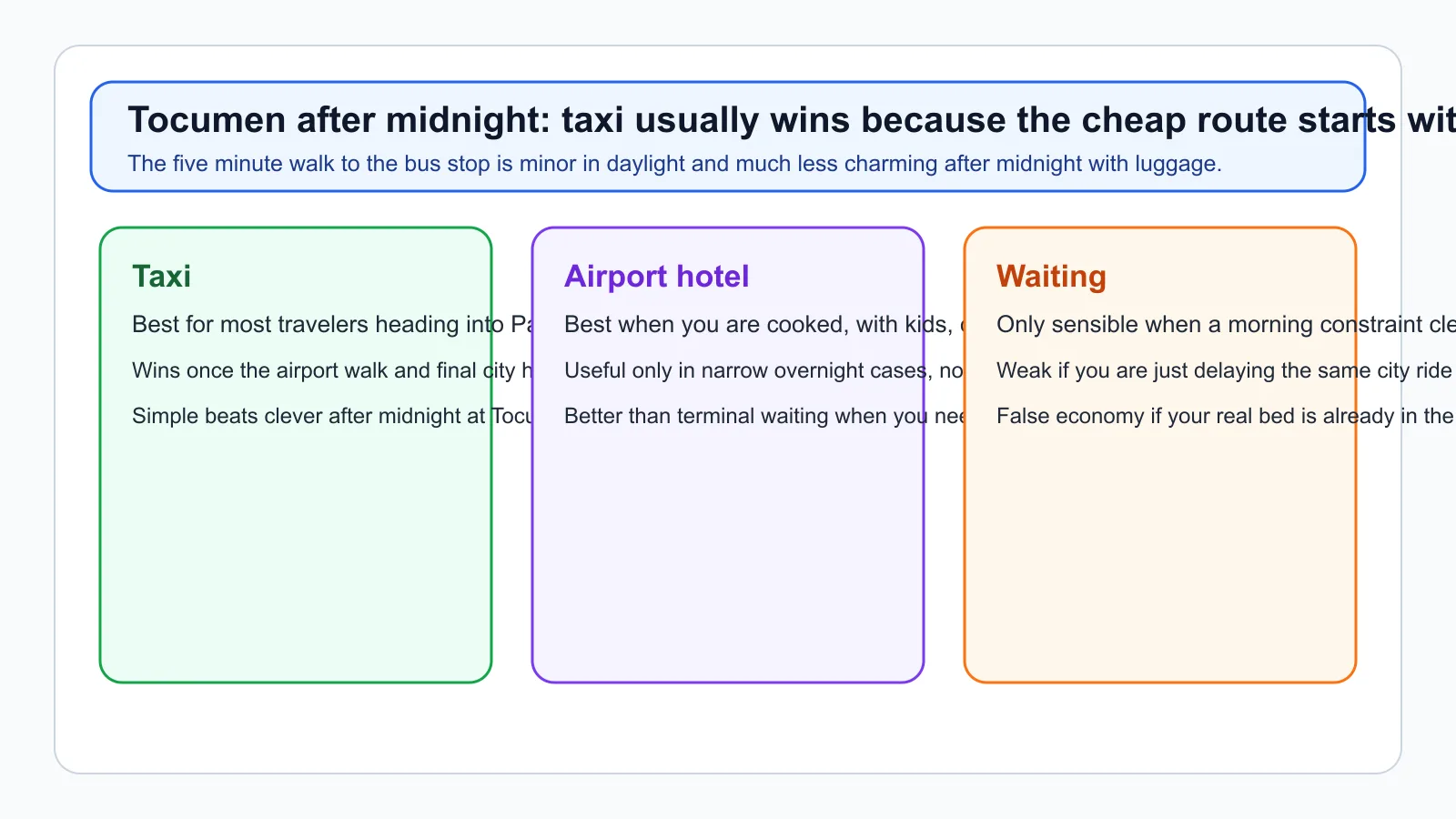
The exception is the final hotel step. If you land late, carry heavy luggage, have children, or need a hotel that is awkward from the S-Bahn, taxi can be the cleaner first-night decision. A cheaper airport route is not a win if it turns check-in into a long platform-and-stairs exercise.
Getting around Munich
Munich is easier than it looks if you choose one transport job at a time. Use S-Bahn for airport and rail logic, U-Bahn for city movement, trams for useful surface links, and walking inside Altstadt or museum areas. Do not buy the wrong ticket because you tried to solve every day at the airport machine.
For exact fare choices, use Munich public transport tickets. The city-guide rule is simple: airport day, city day, and day-trip day may need different ticket thinking.
A calm 3-day Munich plan
Arrival day: Altstadt orientation and easy dinner
Arrive, drop bags, learn your nearest station, then do a short Altstadt or hotel-neighborhood loop. Do not turn the first night into a full beer-hall and museum plan.
Classic Munich day: Altstadt, food, one major interior
Use Marienplatz, Viktualienmarkt, Residenz or another major focus, then stop before the day becomes a checklist. Munich rewards meals and pauses more than speed.
North-side or museum day
Choose Maxvorstadt museums, English Garden, Schwabing, or a slower beer-garden rhythm. If you have four days, add Nymphenburg or a day trip without stealing time from the city itself.
Munich Hbf and early trains
Munich Hbf can be the right base when the trip is rail-heavy, but it is not one uniform area. If you arrive late or leave early, choose a hotel with a clean walking line and clear check-in. If you are staying longer, decide whether station convenience is worth giving up a more atmospheric neighborhood. For detailed station stays, use the linked Hbf hotel pages rather than guessing from a map.
Food, beer halls, and when to slow down
Munich is not a city where meals should be treated as gaps between sights. A beer hall, market lunch, cafe stop, or beer-garden afternoon can be the part of the day that makes the trip feel like Munich rather than a checklist of buildings. The mistake is waiting too long to eat, then choosing whatever is nearest in the most crowded street.
Use meals as pacing tools. Put a market or old-town lunch between sightseeing blocks. Use a beer garden or cafe as the bridge between museum time and the evening. If you are traveling with children or older relatives, this matters even more because Munich's best days are usually steady, not heroic.
When to add a day trip
Munich is a strong base for Bavaria, but a day trip should not steal the only day when Munich itself could breathe. If you have two days, stay in the city. If you have three days, add a day trip only if Munich's core plan is already clear. If you have four days, a day trip becomes much easier without making the city feel rushed.
The practical test is simple: if you cannot name what you are giving up inside Munich, do not add the day trip yet. Nymphenburg, English Garden, Maxvorstadt, beer gardens, and a slower Altstadt day may be more valuable than a long rail outing added only because it is famous.
Common Munich mistakes
Booking near Hbf without checking the exact street: station convenience is useful only when the final walk feels good.
Trying to do every classic sight in one day: Munich gets better with meals, pauses, and one major focus at a time.
Confusing airport tickets with city movement: solve MUC arrival first, then the daily ticket pattern.
Adding a day trip too soon: give Munich itself enough time before spending a whole day elsewhere.
The best travel experiences in Munich happen when you slow down. Instead of rushing between five attractions in a day, pick two and spend quality time at each. You will remember a relaxed afternoon at a local market far longer than a rushed visit to a museum.
Carry a small notebook or use your phone to jot down the names of restaurants, streets, and neighborhoods that locals mention. The best recommendations come from conversations, not from guidebooks. Writing them down means you will actually remember them tomorrow.
Local tourism offices sometimes offer free walking tours, discount cards, and practical advice that is better than any online source. Visit the office on your first day and ask what is happening that week. Events, markets, and festivals that are not in guidebooks often show up here.
Many attractions offer discounted tickets in the late afternoon or on specific days of the week. Check the official website for reduced hours and special offers. A museum that costs full price at 10 AM may be half-price after 4 PM.
Learn three phrases in the local language: hello, thank you, and excuse me. These open more doors than any phrasebook app. Locals appreciate the effort even if your pronunciation is terrible, and it changes the tone of every interaction.
Pocket tissues are useful in more situations than you expect. Not every public restroom has paper towels or hand dryers, and some local eateries use napkins sparingly. A small pack weighs nothing and solves a dozen small daily inconveniences.
The best travel experiences in Munich happen when you slow down. Instead of rushing between five attractions in a day, pick two and spend quality time at each. You will remember a relaxed afternoon at a local market far longer than a rushed visit to a museum.
Carry a small notebook or use your phone to jot down the names of restaurants, streets, and neighborhoods that locals mention. The best recommendations come from conversations, not from guidebooks. Writing them down means you will actually remember them tomorrow.
Local tourism offices sometimes offer free walking tours, discount cards, and practical advice that is better than any online source. Visit the office on your first day and ask what is happening that week. Events, markets, and festivals that are not in guidebooks often show up here.
Many attractions offer discounted tickets in the late afternoon or on specific days of the week. Check the official website for reduced hours and special offers. A museum that costs full price at 10 AM may be half-price after 4 PM.
Learn three phrases in the local language: hello, thank you, and excuse me. These open more doors than any phrasebook app. Locals appreciate the effort even if your pronunciation is terrible, and it changes the tone of every interaction.
Pocket tissues are useful in more situations than you expect. Not every public restroom has paper towels or hand dryers, and some local eateries use napkins sparingly. A small pack weighs nothing and solves a dozen small daily inconveniences.
The best travel experiences in Munich happen when you slow down. Instead of rushing between five attractions in a day, pick two and spend quality time at each. You will remember a relaxed afternoon at a local market far longer than a rushed visit to a museum.
Related guides for Munich
Munich rewards travelers who plan ahead but leave room for spontaneous discoveries. The best experiences often come from wandering side streets, trying local food at neighborhood restaurants, and talking to locals about their recommendations. A good city guide gives you the framework, but the real trip is what you make of it.


