Updated: May 2026
A practical Rome decision guide for where to stay, how to pace ancient Rome and Vatican days, airport and rail arrivals, reservations, family needs, late arrivals, accessibility, and a calm three-day route.
Rome is not hard because the sights are far apart. Rome is hard because the best parts sit close enough to tempt you into one more stop, one more piazza, one more church, one more gelato detour, and one more walk across stone streets after the group is already tired. The city rewards curiosity, but it punishes plans that ignore heat, ticket slots, meal timing, airport arrivals, and the last stretch back to the room.
This guide is built around the decisions a traveler actually has to make: where should you stay, which neighborhoods fit different trip styles, how should a first-timer sequence three days, when do reservations matter, and when should a taxi, rail transfer, or shorter walking loop replace the clever plan? Use it with the if Rome is part of a wider route,.
Quick answer
For most first visits, stay in the historic center, Monti, Prati, or a calm Termini edge depending on your fixed point. Plan Rome by clusters: ancient Rome with Monti, Pantheon and Piazza Navona with Campo de' Fiori, Vatican with Prati, and Trastevere as an evening or second-day add-on rather than a forced finish after every long day. If you want one polished central fallback, Hotel Artemide is the clearest fit.
Key details
Check the specific details for your trip timing and booking method. Prices, schedules, and availability change seasonally, so verify before you go.
Practical tips
Check the specific details for your trip timing and booking method. Prices, schedules, and availability change seasonally, so verify before you go.
Common questions
Check the specific details for your trip timing and booking method. Prices, schedules, and availability change seasonally, so verify before you go.
Book the Colosseum and Vatican Museums through official channels, keep airport arrival plans simple, and leave one flexible half-day for heat, rain, tired feet, missed meals, or the sight you genuinely want more time with.
Rome planning rule
Do not build Rome as a list of monuments. Build it as a chain of walking surfaces, timed entries, shade breaks, meals, transport exits, and the final hotel approach. The plan that still works at 17:30 in warm weather is the better plan.
Key details
Check the specific details for your trip timing and booking method. Prices, schedules, and availability change seasonally, so verify before you go.
Practical tips
Check the specific details for your trip timing and booking method. Prices, schedules, and availability change seasonally, so verify before you go.
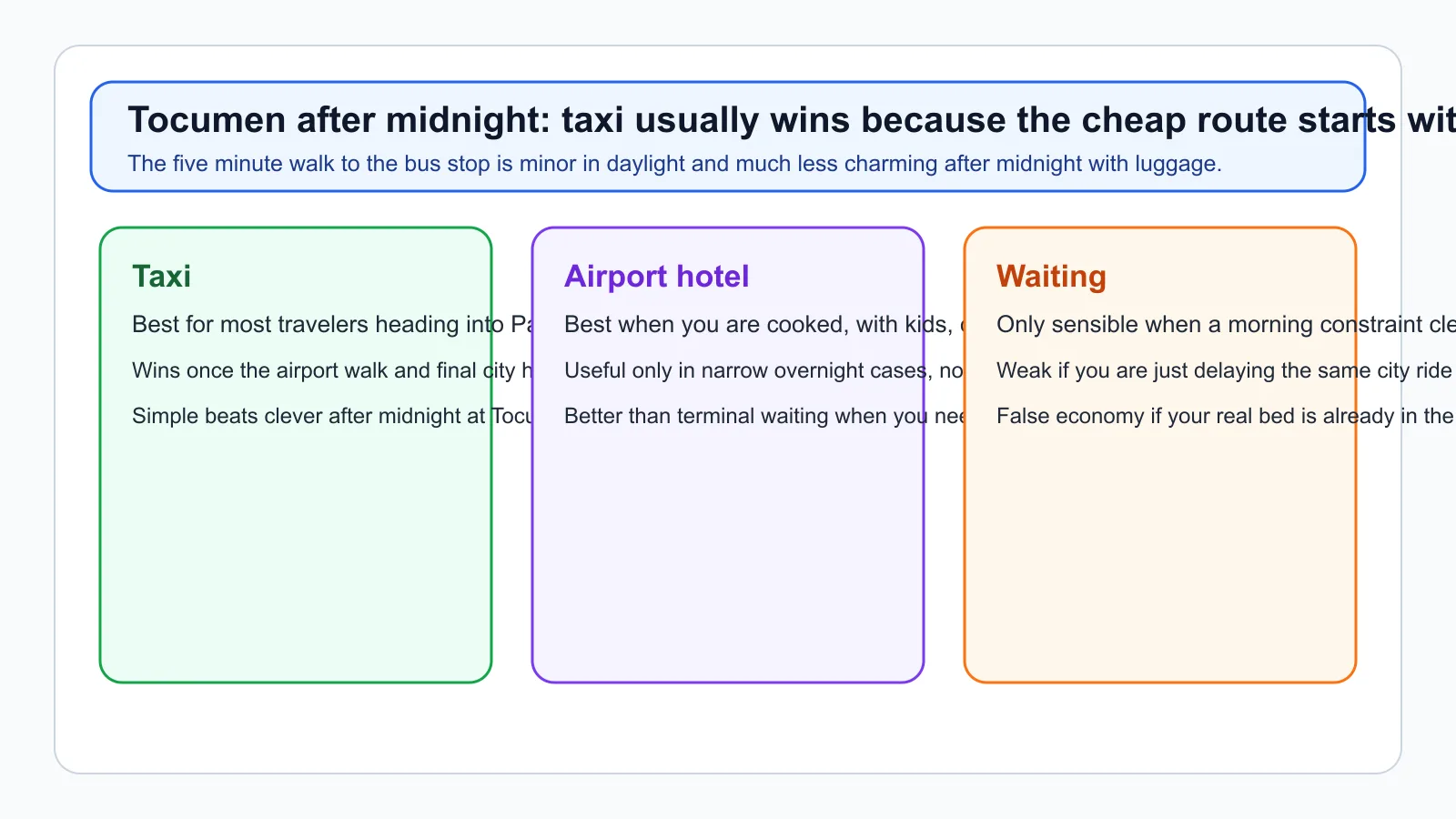
What a late arrival changes in Rome
Rome gets less forgiving when the first night is late. If you land tired, the right choice is not the prettiest neighborhood on a map. It is the one that lets you reach the room, drop the bags, and get dinner without crossing the city again. That usually pushes you toward a more central base, or toward a hotel on the same side of the city as your first big sight line.
If the airport transfer itself already feels annoying, stop pretending the rest of the day will magically improve. A late arrival plus a poorly placed hotel is how Rome turns into a series of solved problems you did not need to create.
Airport and train arrivals
The airport decision matters because Fiumicino and Ciampino do not produce the same evening. Fiumicino usually gives you a more structured rail-or-taxi choice; Ciampino often pushes you toward the cleaner direct transfer. Either way, do not let the hotel location be an afterthought. If you arrive by rail, the hotel should support a short final walk or a clear taxi hop. If you arrive by plane late, the room should win on arrival simplicity before it wins on atmosphere.
The same rule applies from Termini. Termini is practical, but it is not a personality test. Use it when you need the rail connection or when the airport logic makes it the cleaner edge, not because a random booking page says it is central enough.
Practical verdict
For a first Rome trip, the easiest answer is still the one that keeps the city simple: stay central enough to walk the classic core, but do not overvalue a glamorous pin that turns every evening into a small expedition. If the trip is short, the room should reduce friction faster than it creates it.
Use the broader Italy guide when you need the country-level logic, and use the Rome sibling guide when you want a different angle on the same city. This page exists to keep the first decision honest: do not choose Rome as if every neighborhood were equally good for every trip.
Colosseum first or Vatican first?
For a short Rome trip, the order matters more than travelers expect. If you start with the Colosseum side, you get the classic city rhythm and can keep the rest of the day centered. If you start with the Vatican, you should protect more of the morning and expect the day to feel more deliberate. Both work. What does not work is trying to do both fast and treating the city like a checklist race.
Pick the first anchor based on the hotel location and the energy you have on the day. Rome rewards an itinerary that follows the city instead of bullying it.
Rome booking checklist
1. Pick a neighborhood that matches the main sight block. 2. Reserve the major sights with the time slots that matter. 3. Decide the airport or rail transfer before the first dinner. 4. Keep one slower half-day in reserve so the trip can survive heat, queues, or a long lunch.
This checklist is the difference between a good Rome trip and a trip that spends all its energy on moving between famous places. The city is more enjoyable when you stop pretending every hour needs a landmark.
Short chooser
Book Centro Storico if this is the first Rome trip and you want the city to feel obvious from the first morning.
Book Monti if you want the best balance of old-Rome access, dinner options, and a base that does not feel like a museum lobby.
Book Trastevere if the trip cares about evening energy and you can handle a little more movement between daytime sights.
Book Prati if the Vatican side matters most or you want quieter evenings with cleaner transport logic.
That is the real chooser. Pick the neighborhood that makes the first night, the first walk, and the last hotel return smaller. If the room is making every decision harder, the district is the wrong one.
The best travel experiences in Rome happen when you slow down. Instead of rushing between five attractions in a day, pick two and spend quality time at each. You will remember a relaxed afternoon at a local market far longer than a rushed visit to a museum.
Carry a small notebook or use your phone to jot down the names of restaurants, streets, and neighborhoods that locals mention. The best recommendations come from conversations, not from guidebooks. Writing them down means you will actually remember them tomorrow.
Local tourism offices sometimes offer free walking tours, discount cards, and practical advice that is better than any online source. Visit the office on your first day and ask what is happening that week. Events, markets, and festivals that are not in guidebooks often show up here.
Many attractions offer discounted tickets in the late afternoon or on specific days of the week. Check the official website for reduced hours and special offers. A museum that costs full price at 10 AM may be half-price after 4 PM.
Learn three phrases in the local language: hello, thank you, and excuse me. These open more doors than any phrasebook app. Locals appreciate the effort even if your pronunciation is terrible, and it changes the tone of every interaction.
Pocket tissues are useful in more situations than you expect. Not every public restroom has paper towels or hand dryers, and some local eateries use napkins sparingly. A small pack weighs nothing and solves a dozen small daily inconveniences.
Source check
This guide leans on official Rome sources: Turismo Roma on Esquilino and Monti, Turismo Roma on Prati and the Vatican side, ATAC tickets and passes, ADR Fiumicino train, and the Colosseum official ticket page.
Check the live pages again close to travel if your trip depends on a specific opening hour, fare rule, or airport transfer decision. Rome has enough moving parts already. There is no need to let a stale ticket rule or outdated airport page join the trip too.
The best travel experiences in Rome happen when you slow down. Instead of rushing between five attractions in a day, pick two and spend quality time at each. You will remember a relaxed afternoon at a local market far longer than a rushed visit to a museum.