Planning a trip to the city? This guide cuts through the noise with practical advice for first-time visitors.
Rome2Rio transfer planner airport rail linkChicago is easy to underestimate because the famous parts look close together: the river, Millennium Park, the lakefront, the museums, the Magnificent Mile, the West Loop, and the theater district. The real planning problem is not whether Chicago has enough to do. It is choosing a base and a daily rhythm that do not turn the trip into a loop of long walks, late rides, and museum fatigue.
This is the broad Chicago planning hub. Use it to choose where to stay, decide when CTA is smart from ORD or MDW, understand why most visitors do not need a car, time an architecture river cruise, and build a 3 to 5 day route with enough space for museums, neighborhoods, lakefront time, food, weather, and family pacing.
Quick answer: most first-timers should stay in River North, the Loop, or the West Loop. River North is the easiest all-rounder for restaurants, river access, nightlife, and short rides. The Loop is best for museums, parks, theaters, and transit. West Loop is best when food is the main trip priority.
Best default plan: 3 nights for the river, architecture, Millennium Park, one museum block, and one neighborhood dinner. Add a fourth or fifth night if you want slower lakefront time, families need breaks, or you want Lakeview, Lincoln Park, Pilsen, Hyde Park, or Wicker Park without rushing.
Start with the base: Loop, River North, West Loop, or North Side
The best Chicago base depends on the moment you want to make easiest. If the hardest moment is airport arrival with luggage, choose a hotel with simple CTA or taxi access. If the hardest moment is getting back after dinner, stay near the restaurants and evening plans. If the hardest moment is moving kids between museums, the river, and the hotel, stay where the day has short resets.
Chicago rewards a base with a clear job. A hotel that is perfect for theater and museums may be less ideal for late West Loop dinners. A West Loop hotel can be excellent for food but less obvious for a first-timer who wants parks, lakefront, and classic sightseeing outside the door.
River North
Best all-rounder. Good for restaurants, river cruises, nightlife, Magnificent Mile access, and first-timers who want Chicago to feel close without staying in the quietest business core.
The Loop
Best for museums and transit. Strong for Millennium Park, the Art Institute, theaters, CTA access, and families who want classic sights close to the hotel.
West Loop
Best for food. Strong for restaurants and a more modern base, but less useful if every day starts with classic downtown sightseeing.
Lakeview and Lincoln Park
Best for slower neighborhood trips. Good for repeat visitors, families, parks, baseball, and lakefront time, but less efficient for a short first stay.
Where to stay by trip style
River North for the easiest first visit
River North works because it sits between the river, restaurants, the Magnificent Mile, and short rides to the Loop and West Loop. It is not the cheapest option, and some blocks feel more nightlife-heavy than others, but it solves a lot of first-trip friction. If you are taking an architecture river cruise, eating out, and walking downtown, this is usually the simplest base.
The Loop for museums, parks, theaters, and CTA
The Loop is practical, especially for families and first-timers who want Millennium Park, the Art Institute, theaters, and transit close by. Its weakness is evening atmosphere on some business-heavy blocks. If you stay here, choose a hotel with a comfortable dinner plan nearby or accept that some evenings will end with a short ride back.
West Loop for food-first trips
The West Loop is the right base when restaurants drive the itinerary. It is less convenient for a first-timer who wants to walk out to every classic sight, but it can make evenings easier and more memorable. If your visit has one or two must-book dinners, staying nearby may save more energy than staying closer to a landmark.
Lakeview and Lincoln Park for repeat visitors and families
Lakeview and Lincoln Park work when you want parks, lakefront, neighborhood cafes, baseball, and a slower local rhythm. They are less efficient for a 3-day first trip built around downtown museums and architecture. Choose them when the North Side is part of the trip, not because the hotel rate looks better.
ORD or MDW arrival: CTA, taxi, or rideshare?
Chicago has two major airport arrival patterns. From O'Hare, the Blue Line can be a useful no-traffic route into the destination. From Midway, the Orange Line can be similarly practical for Loop-area stays. The train makes the most sense with light luggage, daytime arrival, and a hotel close to a sensible station.
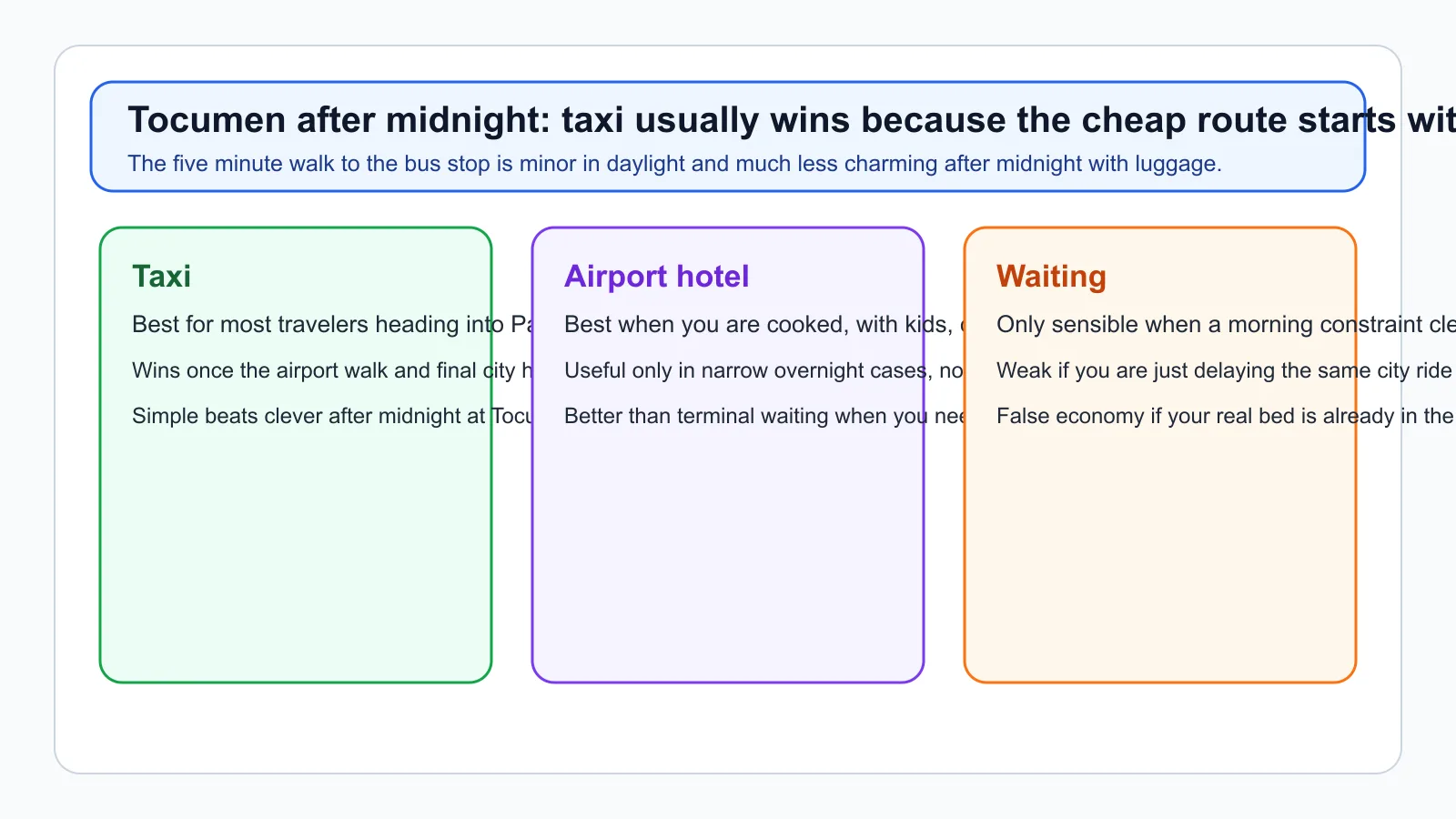
Taxi or rideshare becomes the better move when you land late, have heavy bags, travel with kids, or stay somewhere that requires an awkward final transfer after the train. The train may win on traffic and price, but the last few blocks matter. If the final walk is cold, wet, dark, or confusing, a direct ride can be the better travel decision.
Arrival rule: use CTA when the route is direct and your bags are manageable. Use taxi or rideshare when the final station-to-hotel segment is the weak link.
Low-battery fallback: screenshot your hotel address, cross street, and CTA stop before boarding at ORD or MDW. If the train choice stops making sense, switch to a direct ride before everyone gets tired.
Museum and lakefront pacing
Chicago's museums are not quick checklist stops. The Art Institute, Field Museum, Museum of Science and Industry, Shedd Aquarium, and Adler Planetarium can each absorb more time than first-timers expect. The mistake is stacking a major museum, a long lakefront walk, shopping, and a neighborhood dinner into one day with no reset.
Choose one major museum block per day. Pair the Art Institute with Millennium Park and the river. Pair the Museum Campus with lakefront time. Put the Museum of Science and Industry with Hyde Park rather than forcing it into a downtown day. If you are traveling with children, treat a major museum or aquarium as the anchor, not the warm-up.
Summer festivals and winter weather tradeoffs
Summer is Chicago at full volume: beaches, patios, music, parks, lakefront paths, and big public events. It is also when hotels can price higher and popular weekends book early. If a specific festival is the reason for the trip, use the organizer's current page before booking. If the festival is not the reason, avoid building the hub page around fragile dates that will need constant maintenance.
Winter is colder and darker, but it can be a strong museum, theater, food, and hotel-value season. The risk is not that winter is impossible. The risk is pretending it will behave like summer. Stay closer to indoor anchors, reduce exposed walks, and make taxi or rideshare the fallback when wind, snow, or lake-effect cold changes the plan.
For official date planning, Chicago Restaurant Week 2026 runs Jan. 23-Feb. 8 according to Choose Chicago. For other seasonal events, check official city or organizer calendars close to booking instead of relying on stale travel-blog date lists.
A flexible 3 to 5 day Chicago route
Day 1: river, Millennium Park, easy dinner
Use the first day for orientation. Walk the river, see Millennium Park, and keep dinner close to your hotel or a single planned neighborhood. If you arrive late from ORD or MDW, do not turn the first night into a long cross-city dinner mission.
Day 2: architecture cruise and one museum block
Pair the architecture cruise with one major museum or a focused downtown walk. Do not add three museum stops. The day is stronger when the cruise has breathing room and the museum visit is not rushed.
Day 3: lakefront and a neighborhood dinner
Use day three for the lakefront, Lincoln Park, Lakeview, Wicker Park, Logan Square, Pilsen, Hyde Park, or Chinatown depending on your interests. Pick one zone and let it carry the day. Chicago's neighborhoods are not a garnish after downtown. They are where many trips become memorable.
Day 4 or 5: food, family pacing, or a second neighborhood
Extra days should reduce pressure, not add clutter. Use them for a food-first West Loop evening, a family-friendly Museum Campus day, a North Side park and lakefront day, or a deeper South Side museum and neighborhood plan. If the weather turns, move the outdoor block indoors and keep the day intact.
Food planning without chasing every famous item
Chicago food is bigger than pizza and hot dogs. Those can be fun, but the stronger plan is to match meals to zones. West Loop for restaurant-driven evenings, River North for convenience, Chinatown for a focused food outing, Pilsen for murals and Mexican food, Logan Square or Wicker Park for neighborhood dining, and Hyde Park when the South Side is already part of the day.
The useful rule is one food anchor per day. If every meal requires a ride, the destination starts to feel bigger than it needs to. Put lunch near the daytime route and save the deliberate transfer for dinner.
Family pacing in Chicago
Families should plan Chicago around anchors and resets. the destination has strong family choices: the lakefront, Maggie Daley Park, Museum Campus, Lincoln Park Zoo, boat rides, and large museums. The problem is distance and stamina, not lack of options.
For kids, one big attraction plus one flexible outdoor or food stop is usually enough. Do not stack the Field Museum, aquarium, architecture cruise, and a long dinner in one day unless your group already handles full urban days well. In winter, keep the hotel closer to indoor plans. In summer, build water, shade, and bathroom stops into the route before anyone needs them.
Safety, comfort, and common-sense routing
Chicago is a normal big city: route choice, time of day, weather, and transit comfort matter. Ask your hotel which station exit or walking route they recommend late at night. Use rideshare or taxi when the last segment feels like the problem, especially after a late dinner, winter weather, or a long museum day.
Near the lake, weather can feel different from the forecast. Bring layers, especially outside summer. Comfortable shoes matter because Chicago walks are often longer than they look once bridges, museum campuses, lakefront paths, and station transfers are included.
How this hub should route future planning
Use this page for the broad Chicago decisions: area choice, ORD versus MDW arrival, CTA versus taxi, car need, architecture cruise timing, museum pacing, lakefront planning, family rhythm, and season tradeoffs. Narrower future pages should handle weekend itineraries, where-to-stay detail, airport arrivals, family-specific plans, and neighborhood comparisons in more depth.
That separation keeps this hub useful. It helps you build the trip before the narrower pages tell you exactly how to execute each piece.
- Chicago city guide
- Where to stay in Chicago
- ORD to Chicago
- Chicago transit
- Chicago late night
- Chicago layover
Related guides:
Sam's practical verdict
Sam's practical verdict: The best transfer choice depends on your bags, your arrival time, and your hotel location. Do not choose based on price alone. Choose based on the moment that is most fragile: heavy bags, late arrival, tired children, or a hotel that is far from public transport.