Updated: February 2026
Hamburg is a city where the district you choose shapes your whole trip: canals and brick warehouses vs nightlife streets, cozy local cafés vs design hotels on the waterfront. The good news: Hamburg is easy to navigate. The hard part is choosing a base that fits your vibe and keeps your days low-friction, especially on arrival night.
Easy first-timer default: stay central-ish with strong connections (Altstadt / Neustadt edges, or near a major S/U hub). For waterfront visuals, pick HafenCity/Speicherstadt-adjacent. If you want one polished waterfront splurge example, The Fontenay is the clearest fit. For nightlife and music energy, consider St. Pauli: choose your micro-street intentionally. For a calmer local rhythm, look toward Eimsbüttel or Altona pockets near good stations.
Pick your Hamburg base by vibe
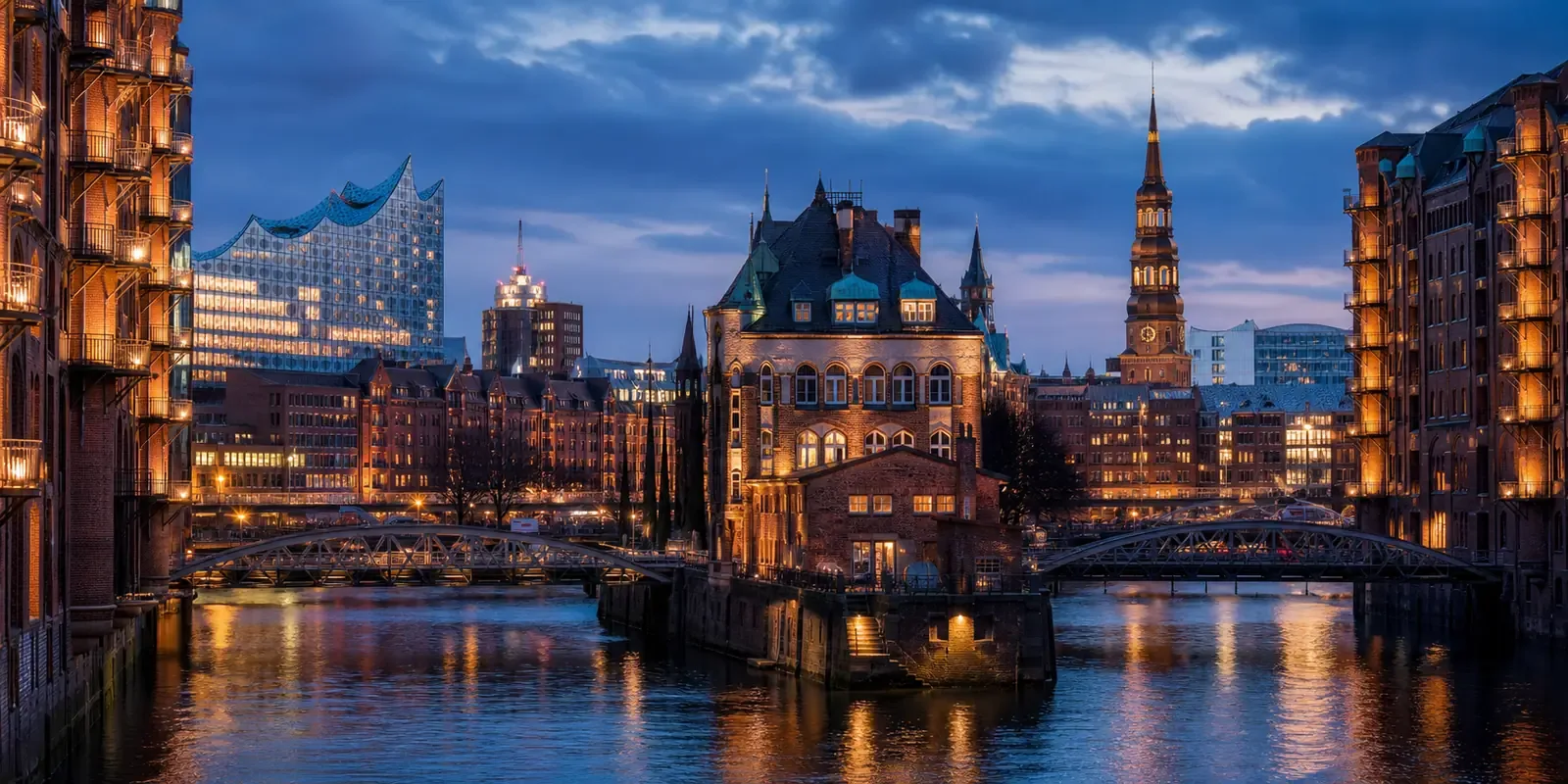
- Postcard Hamburg (brick + water): HafenCity / Speicherstadt-adjacent
- First-timer easy mode: Altstadt / Neustadt edges (central + simple connections)
- Nightlife + music energy: St. Pauli (choose your micro-street for sleep)
- Food + cafés + local-cool: Schanzenviertel (Schanze)
- Calm local rhythm: Eimsbüttel (sleep-first, families)
- Relaxed base + onward trains: Altona (well-connected pockets)
Neighborhoods by vibe (quick guidance)
Altstadt / Neustadt edges
Best for: first-timers who want logistics to disappear. Central connections, short hops, easy evenings.
HafenCity / Speicherstadt-adjacent
Best for: waterfront walks, modern hotels, and that “Hamburg postcard” scenery outside your door.
St. Pauli
Best for: nightlife and music history. Micro-area matters: side streets are often the sweet spot for sleep.
Schanzenviertel
Best for: cafés, food, casual bars, and a neighborhood-led trip.
Eimsbüttel
Best for: calmer evenings and a local rhythm: great for families and sleep-first travelers.
Altona (well-connected pockets)
Best for: a relaxed base with strong onward travel logic. Choose a location near a good station.
Arrival and late-night comfort
If you land late, prioritize fewer steps: taxi from HAM, or S‑Bahn into the city + short taxi last mile. Step-by-step: HAM → Hamburg city center.
Then solve tickets once (so you’re not improvising all trip): Hamburg transport tickets (2026).
Family trips and arrival night
Hamburg is one of those cities where the right neighborhood changes with who is traveling. Families usually do better with a calmer base that still has easy transit and sensible dinners nearby. If the trip includes tired kids or an arrival after a train, the best area is the one that deletes the final friction instead of adding another walk.
Arrival night matters more than people admit. A nice neighborhood that needs one extra transfer after dark is often a worse first-night choice than a more practical district with a shorter route to bed.
Be selective about the vibe
Hamburg is strong because each neighborhood actually feels different. That is useful, but it also means you can be wrong for your exact trip. If the trip is about waterfront, use waterfront logic. If it is about nightlife, pick the nightlife zone and accept the noise. If it is about a short, easy first visit, do not overcomplicate the base just because one district sounds cooler in a list.
The best hotel area is the one that matches your pace, not the one that looks smartest in isolation.
Practical verdict
For first-time Hamburg visitors, the safest default is still an area that balances transport and evening ease. For return visitors, the right answer gets more specific: waterfront for atmosphere, St. Pauli for energy, calmer local streets for recovery, or station-adjacent for the cleanest arrival and departure. That is the real decision. Everything else is decoration.
Hamburg neighborhood matrix
| Area | Best for | Watch out |
|---|---|---|
| Inner city / central | First-timers and easy logistics | Can be less characterful at night |
| St. Pauli / nightlife edge | Energy, bars, late dinners | Noise and later nights |
| Calmer local streets | Families and recovery days | Less nightlife energy |
| Waterfront / harbor-adjacent | Views and atmosphere | Can cost more and still need transit |
Best area by traveler type
First-timer: the central, easy-logistics option wins because it keeps the city small on day one.
Family: choose quieter streets with easy transit and normal dinner options, not the loudest part of town that looks fun on a map.
Nightlife trip: stay closer to St. Pauli or the relevant nightlife corridor and accept the tradeoff on sleep.
Short one-night stay: prioritize arrival simplicity and early-morning departure logic over style points.
First-timer default
If you do not know which Hamburg neighborhood to pick, choose the area that keeps the first day easy and the last day boring. That usually means a central base with reliable transit and enough dinner options that nobody needs a second transport decision after dark.
Hotel listings on booking platforms show the distance to the city center as a straight line, not the walking route. A hotel that looks 500 meters from the main square may actually be a 15-minute walk through winding streets. Check the walking route on a map, not just the distance number.
The cheapest hotel in a neighborhood is not always the best value. A slightly more expensive room with air conditioning, a working elevator, and soundproof windows may save you from a miserable night. Read reviews specifically mentioning sleep quality and noise.
If you are staying more than 3 nights, consider a hotel or apartment with a kitchen or kitchenette. The ability to make breakfast and store snacks saves money and time, especially if you have children or dietary restrictions that make finding suitable restaurants a daily challenge.
Hotels near train stations are convenient for arrivals and departures, but the surrounding area may not be the best for evening walks. Check the neighborhood after dark on a street view tool. Station areas in many cities have a rougher edge at night than during the day.
Booking a room with a cancelable rate gives you flexibility to switch hotels if the first one disappoints. Non-refundable rates save 10-15% but lock you in. For a first visit to a new city, the flexibility is usually worth the small premium.
Check whether the hotel includes breakfast and what it actually offers. Some hotels charge extra for a breakfast that is just coffee and a pastry. Others include a full buffet that saves you 15-20 per person each morning. The value calculation depends on what is included.
Hotel listings on booking platforms show the distance to the city center as a straight line, not the walking route. A hotel that looks 500 meters from the main square may actually be a 15-minute walk through winding streets. Check the walking route on a map, not just the distance number.
The cheapest hotel in a neighborhood is not always the best value. A slightly more expensive room with air conditioning, a working elevator, and soundproof windows may save you from a miserable night. Read reviews specifically mentioning sleep quality and noise.
If you are staying more than 3 nights, consider a hotel or apartment with a kitchen or kitchenette. The ability to make breakfast and store snacks saves money and time, especially if you have children or dietary restrictions that make finding suitable restaurants a daily challenge.
Hotels near train stations are convenient for arrivals and departures, but the surrounding area may not be the best for evening walks. Check the neighborhood after dark on a street view tool. Station areas in many cities have a rougher edge at night than during the day.
Booking a room with a cancelable rate gives you flexibility to switch hotels if the first one disappoints. Non-refundable rates save 10-15% but lock you in. For a first visit to a new city, the flexibility is usually worth the small premium.
Check whether the hotel includes breakfast and what it actually offers. Some hotels charge extra for a breakfast that is just coffee and a pastry. Others include a full buffet that saves you 15-20 per person each morning. The value calculation depends on what is included.
Hotel listings on booking platforms show the distance to the city center as a straight line, not the walking route. A hotel that looks 500 meters from the main square may actually be a 15-minute walk through winding streets. Check the walking route on a map, not just the distance number.
The cheapest hotel in a neighborhood is not always the best value. A slightly more expensive room with air conditioning, a working elevator, and soundproof windows may save you from a miserable night. Read reviews specifically mentioning sleep quality and noise.
If you are staying more than 3 nights, consider a hotel or apartment with a kitchen or kitchenette. The ability to make breakfast and store snacks saves money and time, especially if you have children or dietary restrictions that make finding suitable restaurants a daily challenge.
Hotels near train stations are convenient for arrivals and departures, but the surrounding area may not be the best for evening walks. Check the neighborhood after dark on a street view tool. Station areas in many cities have a rougher edge at night than during the day.
Source check
This guide leans on DB station guidance, HVV ticket and network information, and Hamburg travel information. Station exits, service patterns, and neighborhood walk quality can change, so check the live map and station page before travel if your arrival is tight.
Hotel listings on booking platforms show the distance to the city center as a straight line, not the walking route. A hotel that looks 500 meters from the main square may actually be a 15-minute walk through winding streets. Check the walking route on a map, not just the distance number.