Short answer: For a first Bergen stay, start in the compact centre around Torgallmenningen, Bryggen, or the station side unless you have a specific reason to sleep by the airport.
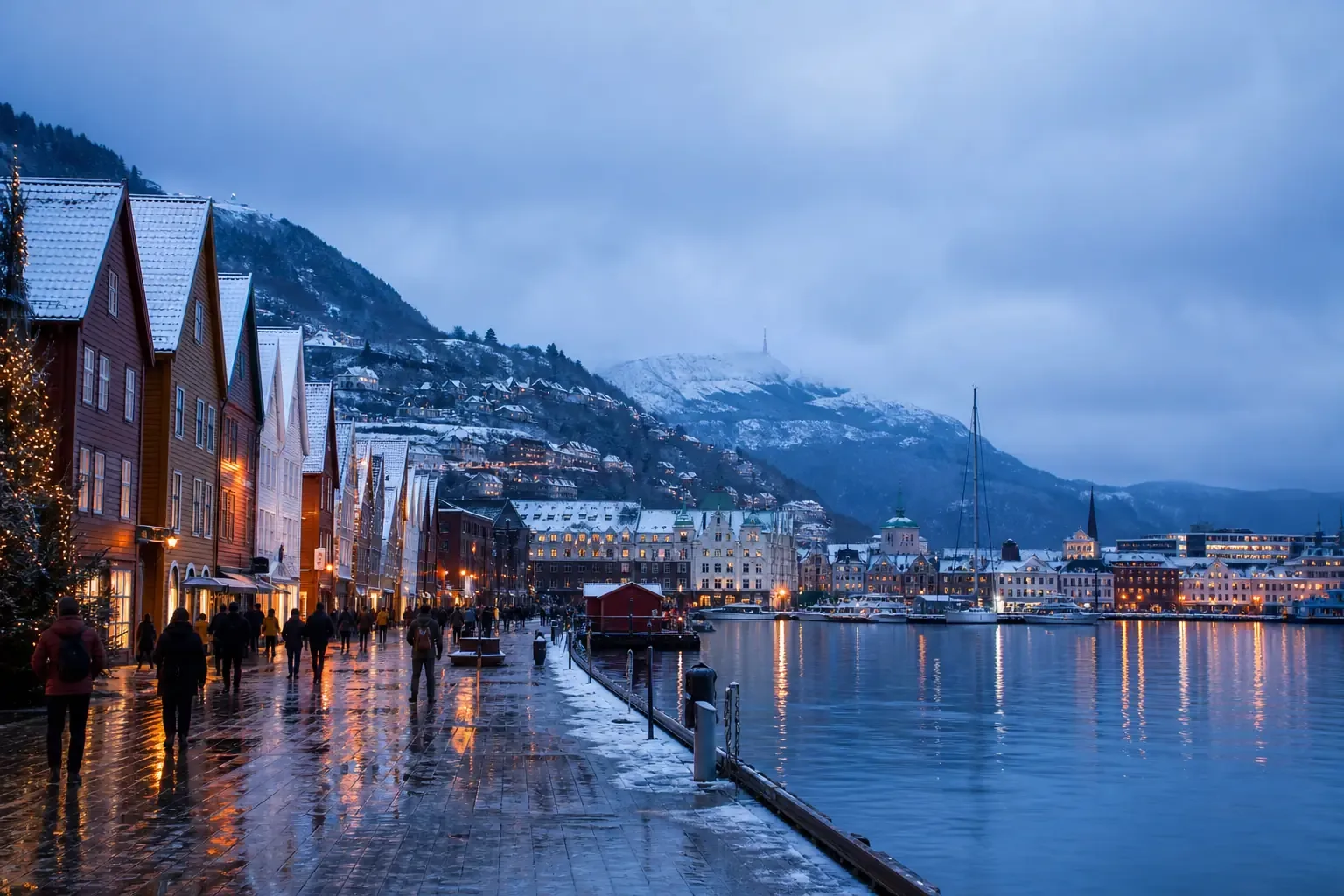
Rain, cobbles, slopes, and a hotel entrance hidden behind a courtyard matter more than a map pin. Choose the area first. Then check the route, the entrance, and the room conditions. The airport transfer is important, but it should not decide the whole hotel booking unless your flight schedule gives it veto power.
Common mistake: booking the cheapest room with a “central” label without checking the exact street and the last 300 metres.
Low-battery fallback: save the hotel address, arrival instructions, and a screenshot of the map before leaving the airport or station.
Choose the district before the hotel
A hotel search result can make every area look equally central. They are not. The decision is whether you want sightseeing outside the door, a quieter night, a useful transport connection, a ferry or business base, or the easiest early departure. Those are different jobs and should not be hidden inside one generic “best area” list.
| Trip priority | Start comparing | Check before booking |
|---|---|---|
| Central streets and Torgallmenningen | Best for first visits, restaurants, and the least complicated sightseeing base. Check the exact street and the final walk from the station or airport stop. | |
| Bryggen and Vågen | Best for harbour atmosphere and early access to the waterfront. Avoid booking on appearance alone: cobbles, nightlife, and exposed weather can make the final luggage walk tiresome. | |
| Nordnes | A calmer central choice with a residential feel. It suits travellers who want to walk into the centre but should check slope, bus access, and the hotel entrance after dark. | |
| Nygårdshøyden | Useful for the university side, museums, and a slightly less postcard-heavy stay. Compare the uphill walk and the route back with bags before calling it central. | |
| Sandviken | A quieter option north of the core. It can work well for longer stays, but the bus stop and the final hill matter more than the advertised distance. | |
| Airport area | Choose this for an early flight or a late arrival, not because the airport hotel is secretly a city-centre neighbourhood. |
What the current arrival sources actually confirm
The official Bergen Airport Flesland source is the place to recheck current airport transport, taxi, ticket, and service details. The operator or city transport source should be used for active routes, fares, stops, and payment instructions. Do not copy an old timetable into a hotel guide and call it planning.
Where the official page is dynamic, blocked, or only shows a selector, keep the advice narrow: check the live page for the current service, then choose the hotel whose final walk remains manageable if the cheapest connection is late, full, cancelled, or simply not worth the handoff with luggage.
Area-by-area booking notes
Central streets and Torgallmenningen: Best for first visits, restaurants, and the least complicated sightseeing base. Check the exact street and the final walk from the station or airport stop. This is the sort of detail worth checking in the booking map, because a district label can cover a much less convenient street edge. Before paying, open the exact hotel address, inspect the route from the likely arrival point, and check reception, luggage storage, and late-arrival instructions. If the final walk is uphill, cobbled, exposed, or poorly lit, treat that as part of the room price.
Bryggen and Vågen: Best for harbour atmosphere and early access to the waterfront. Avoid booking on appearance alone: cobbles, nightlife, and exposed weather can make the final luggage walk tiresome. This is the sort of detail worth checking in the booking map, because a district label can cover a much less convenient street edge. Before paying, open the exact hotel address, inspect the route from the likely arrival point, and check reception, luggage storage, and late-arrival instructions. If the final walk is uphill, cobbled, exposed, or poorly lit, treat that as part of the room price.
Nordnes: A calmer central choice with a residential feel. It suits travellers who want to walk into the centre but should check slope, bus access, and the hotel entrance after dark. This is the sort of detail worth checking in the booking map, because a district label can cover a much less convenient street edge. Before paying, open the exact hotel address, inspect the route from the likely arrival point, and check reception, luggage storage, and late-arrival instructions. If the final walk is uphill, cobbled, exposed, or poorly lit, treat that as part of the room price.
Nygårdshøyden: Useful for the university side, museums, and a slightly less postcard-heavy stay. Compare the uphill walk and the route back with bags before calling it central. This is the sort of detail worth checking in the booking map, because a district label can cover a much less convenient street edge. Before paying, open the exact hotel address, inspect the route from the likely arrival point, and check reception, luggage storage, and late-arrival instructions. If the final walk is uphill, cobbled, exposed, or poorly lit, treat that as part of the room price.
Sandviken: A quieter option north of the core. It can work well for longer stays, but the bus stop and the final hill matter more than the advertised distance. This is the sort of detail worth checking in the booking map, because a district label can cover a much less convenient street edge. Before paying, open the exact hotel address, inspect the route from the likely arrival point, and check reception, luggage storage, and late-arrival instructions. If the final walk is uphill, cobbled, exposed, or poorly lit, treat that as part of the room price.
Airport area: Choose this for an early flight or a late arrival, not because the airport hotel is secretly a city-centre neighbourhood. This is the sort of detail worth checking in the booking map, because a district label can cover a much less convenient street edge. Before paying, open the exact hotel address, inspect the route from the likely arrival point, and check reception, luggage storage, and late-arrival instructions. If the final walk is uphill, cobbled, exposed, or poorly lit, treat that as part of the room price.
When an airport hotel is actually the right choice
Choose the airport area for an early departure, a very late arrival, a short work stop, or a deliberate buffer before a flight. Do not choose it by accident because the booking page calls it “convenient.” Compare the first departure you need, the hotel’s reception and shuttle terms, the cost of getting into the city, and whether you will spend the whole stay commuting back to the sights.
Late arrival changes the answer
After midnight, the cheapest route may be slower, emptier, or no longer running. If the next connection is uncertain and the hotel is not directly beside the arrival point, use the official taxi rank or a confirmed hotel transfer. This is not a failure of travel personality. It is the adult decision when your phone is at 9 percent and the suitcase wheel has started making a noise.
Families, heavy luggage, and mobility
A solo traveller with a backpack can tolerate one extra change. A family, wheelchair user, or traveller with several bags experiences the same district differently. Check lift access, slopes, cobbles, snow or rain exposure, the number of crossings, and whether a vehicle can stop close to the entrance. Ask the property directly when the listing is vague.
Hotel booking checks that prevent expensive regret
- Confirm the exact address and entrance, not only the neighbourhood name.
- Check reception hours and the late-arrival process.
- Check whether luggage storage is available before check-in and after check-out.
- Read recent noise comments for the exact building and street.
- Compare the final walk from the station, stop, ferry, or taxi drop-off.
- For named hotel recommendations, verify the current property page and use one visible Booking.com link in the decision section.
What to do if the first hotel choice fails
If the hotel is farther out than expected, stop trying to rescue the booking with optimism. Confirm the nearest official stop, ask the property for the easiest entrance, and use a taxi for the first arrival if the weather or luggage makes the walk unreasonable. If the area feels wrong after dark, move the next booking rather than spending three nights proving a map pin was technically correct.
Sam's practical verdict
Choose the central streets by default. Pick Bryggen for atmosphere, Nordnes or Nygårdshøyden for a quieter walkable base, and the airport area only when flight timing beats sightseeing. The safest fallback is the hotel with the clearest address, a realistic final walk, reliable late-arrival instructions, and a transport option you can still use when the app, weather, or timetable decides to become mysterious.
Questions worth answering before you book
Is the city centre always the best area?
No. It is the safest default for a first visit, but a business district, airport hotel, ferry-side area, or quieter residential neighbourhood can win when the trip has a specific purpose.
Should I choose a hotel near the station?
Only after checking the station side, the exit, the pavement, and the hotel entrance. “Near” is a map relationship, not a luggage guarantee.
Is an airport hotel useful for one night?
Yes when the flight schedule makes sleep and certainty more valuable than sightseeing. Check the current airport access and the property’s arrival instructions before booking.
What if my phone dies on arrival?
Keep the address, booking confirmation, and first route offline. A staffed counter or official taxi rank is safer than improvising with a dead map.
What should I check on the final booking page?
Check cancellation terms, reception, luggage, exact address, room type, and the route from your arrival point. Then make sure the price still reflects the friction of the area.
Related Bergen planning guides
- Bgo To Bergen City Center 2026 Shuttle Vs Taxi Vs Bus
- Bergen Transit Ticket Guide 2026 What Zone Or Pass Do You Need
- Late Flight In Bergen 2026 When To Skip The Cheap Route
- Bergen Central Station To Bryggen Hotels 2026 Walk Or Taxi
- Old Town Bergen 2026 Where To Stay And What To Avoid
- Bergen In December 2026 What Changes For Transport And Hotels
Sources
- Official Bergen Airport Flesland information
- Official transport/operator information
- Official tourism or accommodation information
- San Juan to Bergen 2026: Budget Travel Options
- Bergen Airport to Old Town 2026: Taxi or Transit?
- BGO Parking 2026: Economy Lot vs Shuttle vs Rideshare
- Bergen Airport with Heavy Luggage 2026: Easiest Transfer Options
- Bergen Family Hotels Near Transit 2026: Arrival-Friendly Picks
- Best Hotels Near Bergen Station 2026
- San Juan to Bergen 2026: Budget Travel Options
- Bergen Airport to Old Town 2026: Taxi or Transit?
- BGO Parking 2026: Economy Lot vs Shuttle vs Rideshare
- Bergen Airport with Heavy Luggage 2026: Easiest Transfer Options
- Bergen Family Hotels Near Transit 2026: Arrival-Friendly Picks
- Best Hotels Near Bergen Station 2026
- San Juan to Bergen 2026: Budget Travel Options
- Bergen Airport to Old Town 2026: Taxi or Transit?
- BGO Parking 2026: Economy Lot vs Shuttle vs Rideshare
- Bergen Airport with Heavy Luggage 2026: Easiest Transfer Options
- Bergen Family Hotels Near Transit 2026: Arrival-Friendly Picks
- Best Hotels Near Bergen Station 2026