Updated: June 2026
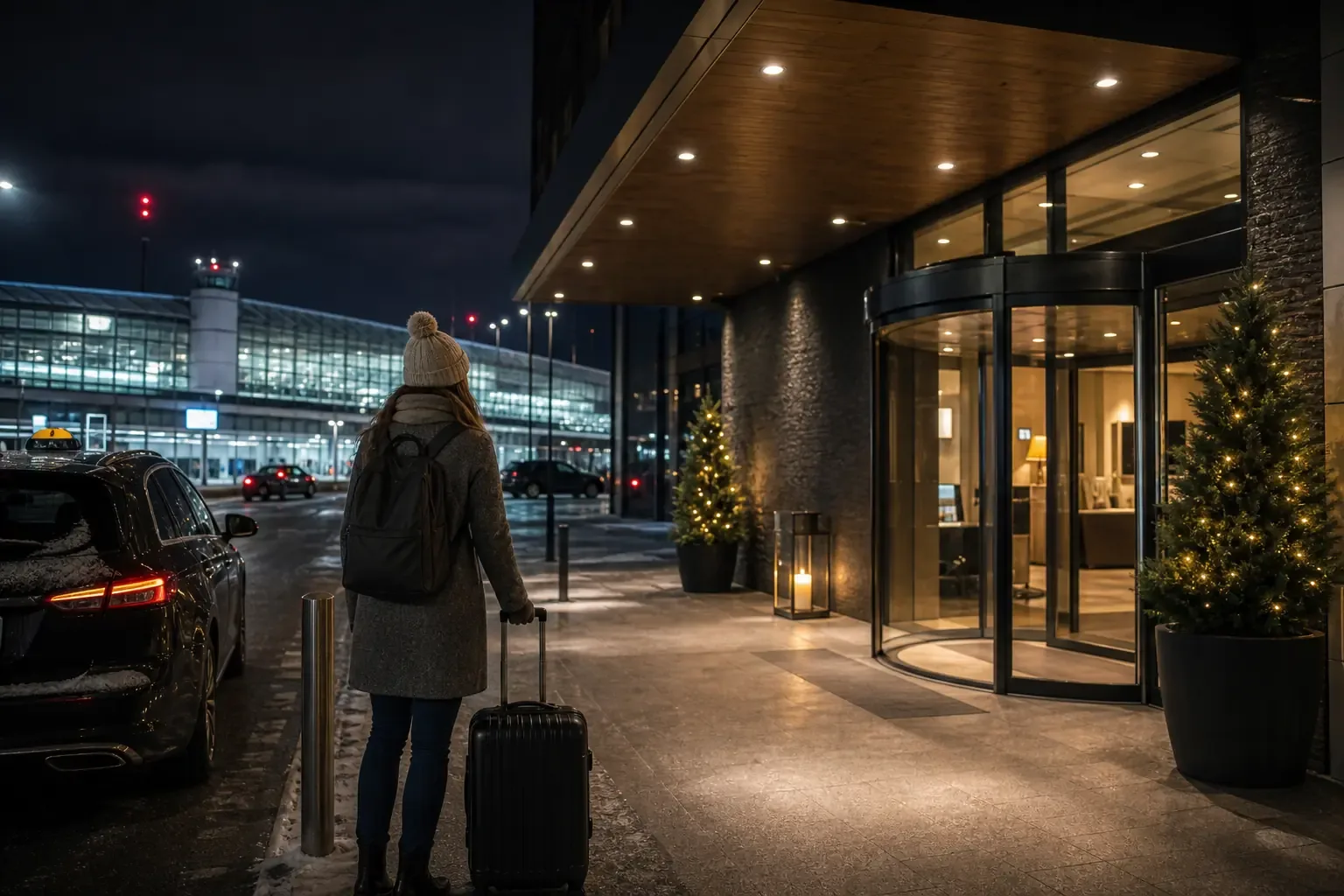
December in Medellin is not hard because the city is impossible. It is hard because festive evenings make ordinary travel mistakes feel louder. The airport arrival that would be mildly annoying in another month can turn into a much longer night once traffic, hotel timing, and tired decision-making start stacking up.
This page works best when you use it as a first-night planning guide, not a generic seasonal postcard. The useful questions are simple: how late are you landing, how much hotel timing flexibility do you have, and how much friction are you willing to accept after dark?
Quick answer
Most useful planning shift: December rewards tighter first-night planning than a normal month.
Where things usually go wrong: airport arrival timing, evening traffic, and hotel logistics start stacking on the same night.
Best default: keep the first evening simple, especially if you land late or have not locked in the hotel side of the plan.
Airport arrival gets more fragile after dark
The airport transfer that feels routine on paper can get sloppier in December when more people are moving at the same time and your own patience is already thin. If you are landing late, make the airport decision before you walk outside. Do not assume you will improvise better after baggage claim.
For the route details, use the dedicated . This page should help you decide how much friction to tolerate in December, not duplicate the whole transfer page badly.
Hotel timing matters more than people think
December problems are often hotel problems disguised as transport problems. Late check-in rules, neighborhood noise, and awkward final approaches matter more when you arrive tired and the streets are busier than usual.
If you are still choosing a place, compare options on Booking.com before your arrival day gets crowded with too many moving parts.
Evening crowd friction changes the feel of the trip
December in Medellin can feel festive and lively, but that same energy makes sloppy planning feel worse. A route that would be mildly annoying at another time of year can turn into a longer night if you have a vague address, bad timing, or one extra transfer too many.
What to keep simple on the first night
Keep the airport transfer simple. Keep the hotel side clear. Keep dinner expectations modest if you land late. The first night is not the moment to prove you are a logistics genius with low battery and luggage.
Common December mistakes
1. Treating a festive month like a normal low-friction arrival.
2. Booking a hotel with a vague location story and solving it after dark.
3. Landing late and still trying to do a full first-night itinerary.
Useful next guides
What to Know Before You Go
Every city has small practical details that make a big difference. Check the local transit payment system before arriving. Some cities use contactless cards exclusively, others require a local app, and some still have cash-only ticket machines at stations.
Weather varies more than you think. Pack layers even in summer. Evenings can be cool in many cities, and air-conditioned spaces create temperature swings that make a light jacket useful.
Getting Connected
Buy a local SIM card or eSIM at the airport if you need data. Tourist SIM plans are usually the best value for short visits. Airport kiosks sell them near arrivals, and setup takes five minutes.
Download offline maps for the city before you arrive. Google Maps and Apple Maps both support offline areas. This saves data and works even when you have no signal in underground transit stations.
FAQ
Is Medellin in December still a good time to visit?
Yes, but it rewards better arrival and hotel planning than a quieter month.
What matters most if I land late in December?
Your airport transfer, hotel timing, and how much evening friction you are willing to absorb on night one.
Should I overplan the first evening?
No. Keep the first night simple and let the city wait until you are not solving luggage and check-in at the same time.
What page should I use for the airport route itself?
Use the dedicated Medellin airport transfer guide for the exact route logic. This page is about December friction, not full transfer duplication.
Why does December feel harder than the raw itinerary suggests?
Because more crowd energy and more moving parts make small mistakes feel bigger, especially after dark.
Sources
Travel insurance is one of those things you do not need until you desperately do. A cancelled flight, lost luggage, or unexpected medical issue can turn a budget trip into an expensive disaster. Check whether your credit card already includes travel coverage before buying a separate policy.
Carry a pen for filling out immigration forms and customs declarations on the plane. The flight attendants often run out, and buying one at the airport shop costs more than it should. A pen weighs nothing and saves you from awkward borrowing.
Photocopy your passport and save it as a photo on your phone. If your passport is lost or stolen, having a copy speeds up the replacement process at the embassy. Keep the original in the hotel safe and carry the copy during day trips.
Check the local tipping culture before you arrive. Tipping norms vary enormously between countries. In some places, tipping is expected and significant. In others, it is unnecessary or even awkward. Knowing the local norm prevents uncomfortable moments at restaurants.
Download a translation app that works offline. Google Translate and similar apps can translate text, voice, and even camera images without an internet connection. Download the language pack for your destination before you leave home Wi-Fi.
Bring a reusable water bottle. It saves money, reduces plastic waste, and ensures you stay hydrated during long walking days. Many cities have public water fountains that are safe to drink from. Fill up before heading out each morning.
Travel insurance is one of those things you do not need until you desperately do. A cancelled flight, lost luggage, or unexpected medical issue can turn a budget trip into an expensive disaster. Check whether your credit card already includes travel coverage before buying a separate policy.
Carry a pen for filling out immigration forms and customs declarations on the plane. The flight attendants often run out, and buying one at the airport shop costs more than it should. A pen weighs nothing and saves you from awkward borrowing.
Photocopy your passport and save it as a photo on your phone. If your passport is lost or stolen, having a copy speeds up the replacement process at the embassy. Keep the original in the hotel safe and carry the copy during day trips.
Check the local tipping culture before you arrive. Tipping norms vary enormously between countries. In some places, tipping is expected and significant. In others, it is unnecessary or even awkward. Knowing the local norm prevents uncomfortable moments at restaurants.
Download a translation app that works offline. Google Translate and similar apps can translate text, voice, and even camera images without an internet connection. Download the language pack for your destination before you leave home Wi-Fi.
Bring a reusable water bottle. It saves money, reduces plastic waste, and ensures you stay hydrated during long walking days. Many cities have public water fountains that are safe to drink from. Fill up before heading out each morning.
Travel insurance is one of those things you do not need until you desperately do. A cancelled flight, lost luggage, or unexpected medical issue can turn a budget trip into an expensive disaster. Check whether your credit card already includes travel coverage before buying a separate policy.
Carry a pen for filling out immigration forms and customs declarations on the plane. The flight attendants often run out, and buying one at the airport shop costs more than it should. A pen weighs nothing and saves you from awkward borrowing.
Photocopy your passport and save it as a photo on your phone. If your passport is lost or stolen, having a copy speeds up the replacement process at the embassy. Keep the original in the hotel safe and carry the copy during day trips.
Check the local tipping culture before you arrive. Tipping norms vary enormously between countries. In some places, tipping is expected and significant. In others, it is unnecessary or even awkward. Knowing the local norm prevents uncomfortable moments at restaurants.
Download a translation app that works offline. Google Translate and similar apps can translate text, voice, and even camera images without an internet connection. Download the language pack for your destination before you leave home Wi-Fi.
Bring a reusable water bottle. It saves money, reduces plastic waste, and ensures you stay hydrated during long walking days. Many cities have public water fountains that are safe to drink from. Fill up before heading out each morning.
Travel insurance is one of those things you do not need until you desperately do. A cancelled flight, lost luggage, or unexpected medical issue can turn a budget trip into an expensive disaster. Check whether your credit card already includes travel coverage before buying a separate policy.
Carry a pen for filling out immigration forms and customs declarations on the plane. The flight attendants often run out, and buying one at the airport shop costs more than it should. A pen weighs nothing and saves you from awkward borrowing.
Photocopy your passport and save it as a photo on your phone. If your passport is lost or stolen, having a copy speeds up the replacement process at the embassy. Keep the original in the hotel safe and carry the copy during day trips.
Check the local tipping culture before you arrive. Tipping norms vary enormously between countries. In some places, tipping is expected and significant. In others, it is unnecessary or even awkward. Knowing the local norm prevents uncomfortable moments at restaurants.
Download a translation app that works offline. Google Translate and similar apps can translate text, voice, and even camera images without an internet connection. Download the language pack for your destination before you leave home Wi-Fi.
Bring a reusable water bottle. It saves money, reduces plastic waste, and ensures you stay hydrated during long walking days. Many cities have public water fountains that are safe to drink from. Fill up before heading out each morning.